
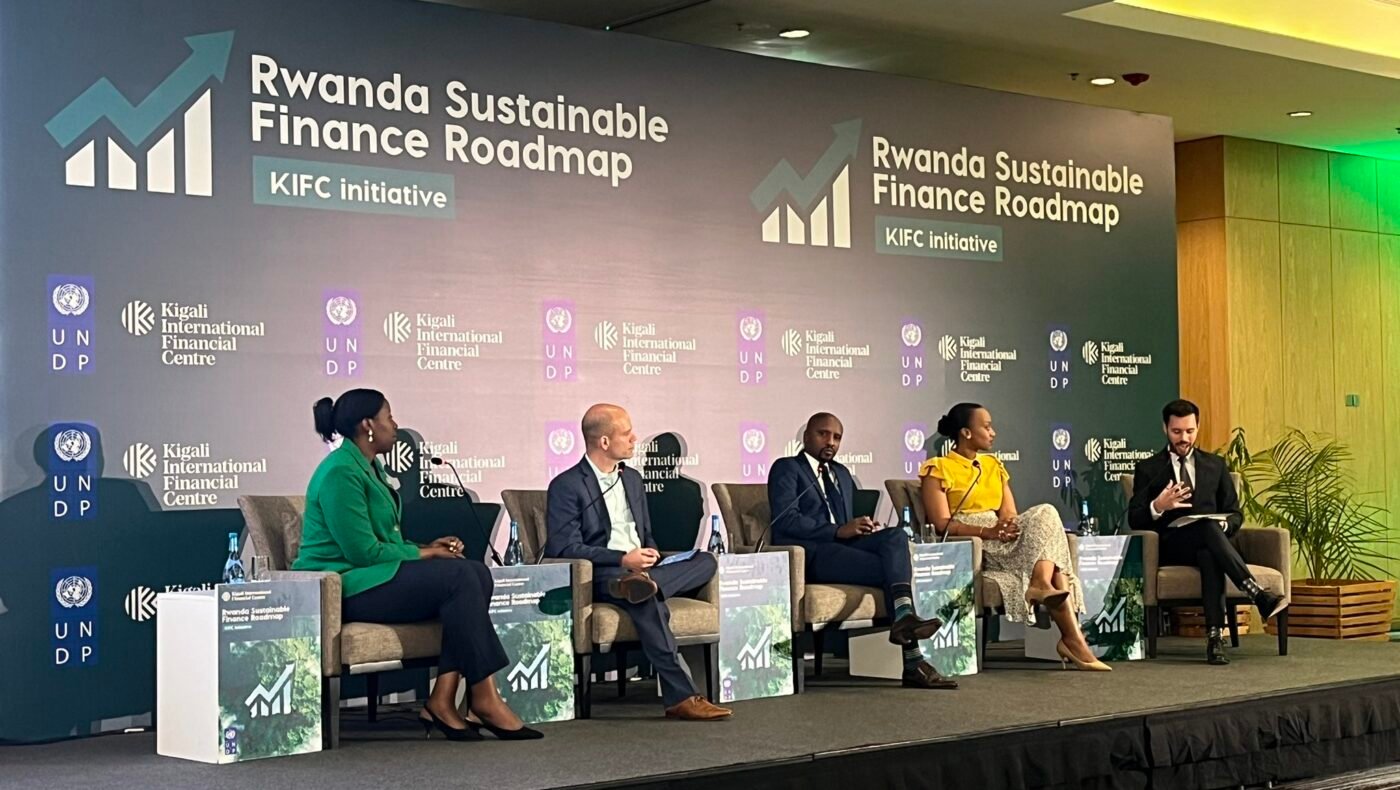
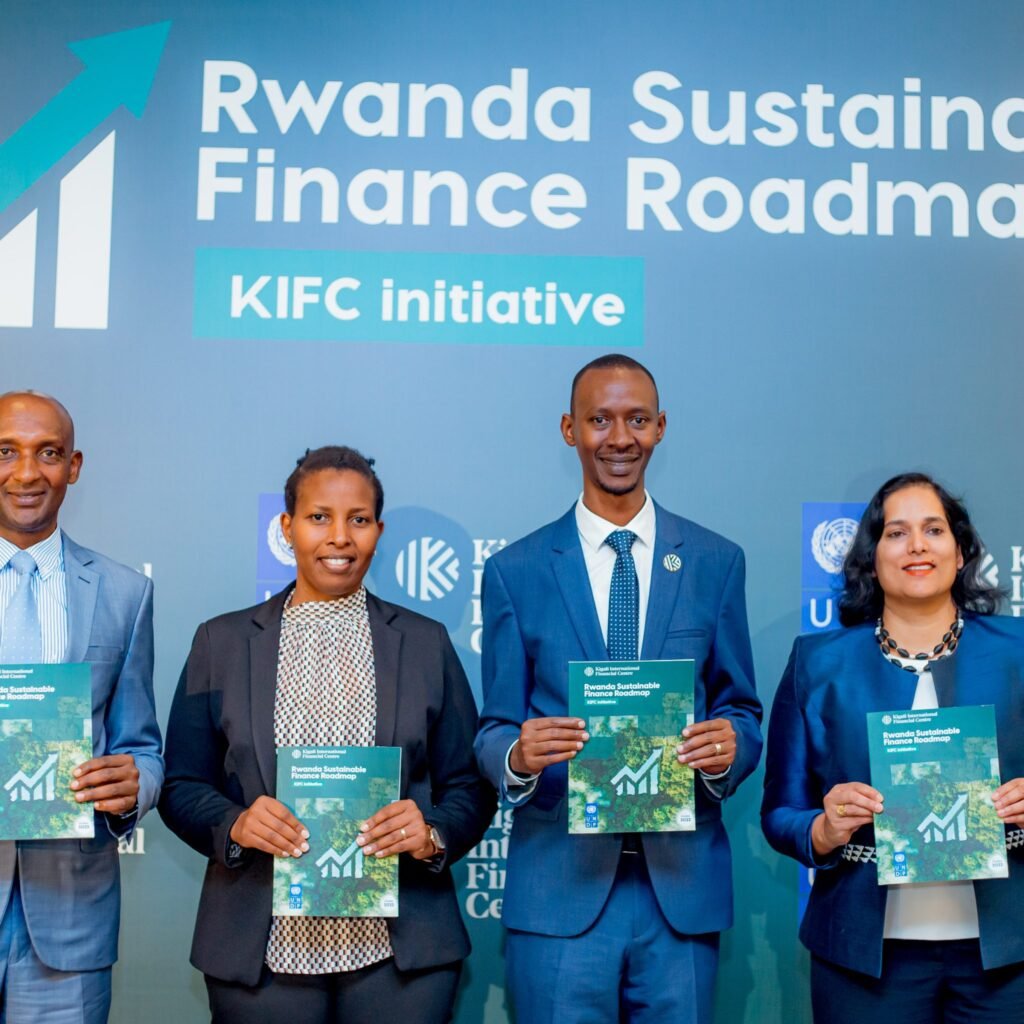
Rwanda has launched its Sustainable Finance Roadmap 2.0, setting out a new phase of its green-finance strategy focused on converting policy frameworks and available funding into investable projects and increased capital deployment. The roadmap was launched on 15 October by the Kigali International Financial Centre (KIFC) during the Carbon Markets Africa Summit 2026 in Kigali. The three-day summit brought together governments, investors, project developers, carbon buyers and technical specialists from across the continent.
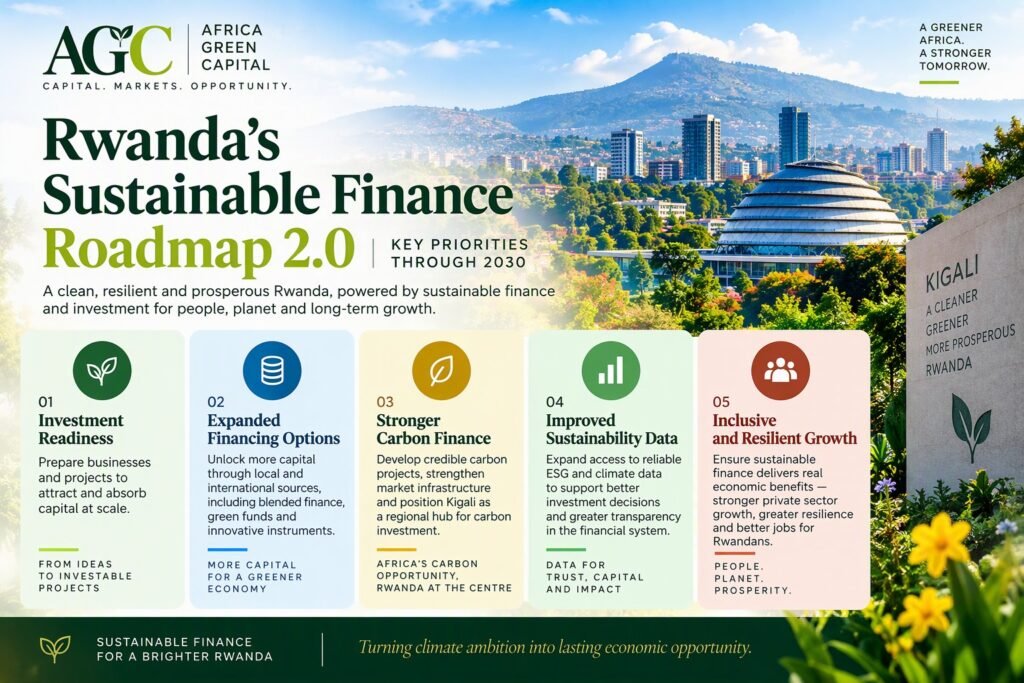
The updated roadmap runs through 2030 and places greater emphasis on preparing businesses and projects to attract investment, expanding financing options for green projects, strengthening carbon-market infrastructure and improving the sustainability data required by investors and financial institutions.
This marks a significant change in Rwanda’s sustainable-finance approach, moving from building the framework for green finance to channelling more capital through it.
From frameworks to capital deployment
Rwanda has spent the past several years establishing much of the infrastructure needed for a sustainable financial market. Since the first sustainable finance roadmap was introduced in 2022, the country has advanced initiatives including the Rwanda Green Taxonomy, climate-related disclosure guidance, ESG guidelines, a green segment on the Rwanda Stock Exchange and the Ireme Invest blended-finance facility.
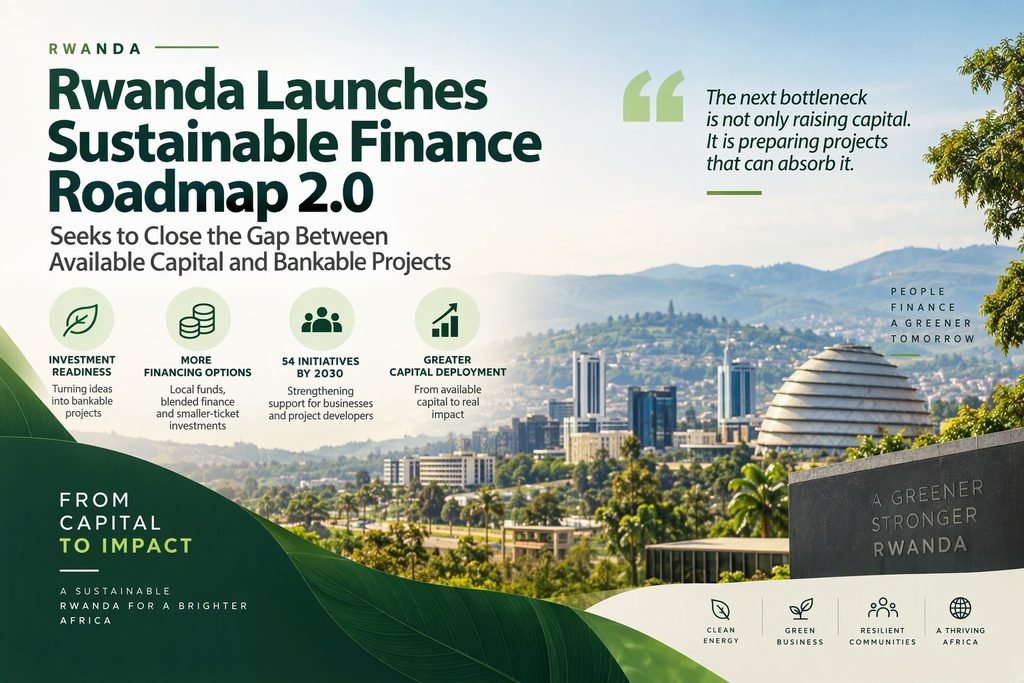
Roadmap 2.0 seeks to build on these foundations by addressing a more difficult challenge: getting finance into projects and businesses at scale. “The next phase is about scale and execution,” Hortense Mudenge, Chief Executive Officer of Kigali International Financial Centre, said at the launch. The roadmap sets out 54 initiatives for implementation through 2030, with responsibilities distributed across institutions in Rwanda’s financial system.
For investors and green enterprises, one of its most important objectives is to address the gap between the availability of capital and the ability of projects to absorb it.
An analysis of the first roadmap reveals that a mid-term review found that less than half of the funds approved under Rwanda’s flagship blended-finance facility had been disbursed, illustrating the continuing gap between available finance and projects reaching financial close.
Building an investment-ready pipeline
Roadmap 2.0 therefore places investment readiness near the centre of the strategy. As experience has shown, many green businesses may require stronger financial records, governance structures and project preparation before they can satisfy the requirements of banks, institutional investors and international climate-finance providers. The roadmap seeks to improve support in these areas while expanding the financing instruments available to enterprises.
Potential sources of capital identified around the roadmap include commercial banks, pension and insurance assets and international climate funds. The financing options envisaged include local investment funds, blended-finance vehicles, smaller-ticket investments and more flexible financing arrangements, potentially widening access for enterprises that struggle to fit conventional bank-lending requirements.
That could be particularly relevant to sectors where established businesses still face constraints accessing conventional debt. At the roadmap discussions, agriculture, manufacturing and mining were identified among areas where access to debt financing remains limited.
Carbon finance becomes a strategic priority
Carbon markets are another significant element of the new framework. Rwanda wants to strengthen its ability to develop credible carbon projects, connect those projects with capital and improve the infrastructure needed to participate in domestic and international carbon markets. The country is also seeking to position Kigali as a regional hub for carbon aggregation and investment structuring.
The roadmap’s launch at the Carbon Markets Africa Summit 2026 also placed that ambition within a wider push to solve the financing constraints affecting African carbon projects.The summit programme covered project areas including blue carbon, reforestation, agriculture, rangeland restoration and waste-related solutions, while investor and buyer discussions examined financing, pricing and offtake arrangements required to move projects towards market.
Better data for sustainable investment
The third major issue is sustainability information. Roadmap 2.0 seeks to expand access to the data and digital infrastructure needed for sustainable finance. This is particularly important as investors increasingly require information that allows them to assess environmental performance, project risks and investment outcomes alongside conventional financial metrics.
Improved sustainability data could also complement the country’s existing green taxonomy and climate-related disclosure architecture, providing investors with a clearer basis for identifying and evaluating sustainable assets. Implementation will involve institutions across Rwanda’s financial ecosystem. These include the National Bank of Rwanda, Capital Market Authority, Rwanda Stock Exchange, Ministry of Finance and Economic Planning, Ministry of Environment, Rwanda Green Fund, Development Bank of Rwanda and other industry bodies.
The capital question
For Rwanda, the test of Roadmap 2.0 will not simply be whether more sustainable-finance policies or instruments are created. It will be whether those mechanisms result in private and institutional capital reaching viable projects. Hortense Mudenge said the framework should ultimately be judged by “increased capital deployment, more investment ready enterprises, stronger private sector growth, greater resilience, and ultimately better jobs.”
That makes the roadmap particularly significant from an African green-capital perspective. The challenge facing many African markets is increasingly not only the absence of climate-finance commitments. It is the gap between those commitments and a pipeline of projects capable of meeting the commercial, governance, data and risk requirements necessary to attract capital.
Rwanda’s Roadmap 2.0 is an attempt to close that gap.
If implementation succeeds, its most important outcome may therefore be measured less by the number of new green-finance frameworks created and more by how much capital actually reaches businesses, infrastructure and projects capable of turning the country’s sustainability ambitions into investable economic activity.
Sectors: Adaptation and Resilience
Deal type: Blended Finance, Guarantee and Credit Enhancement, Technical Assistance Facility
