
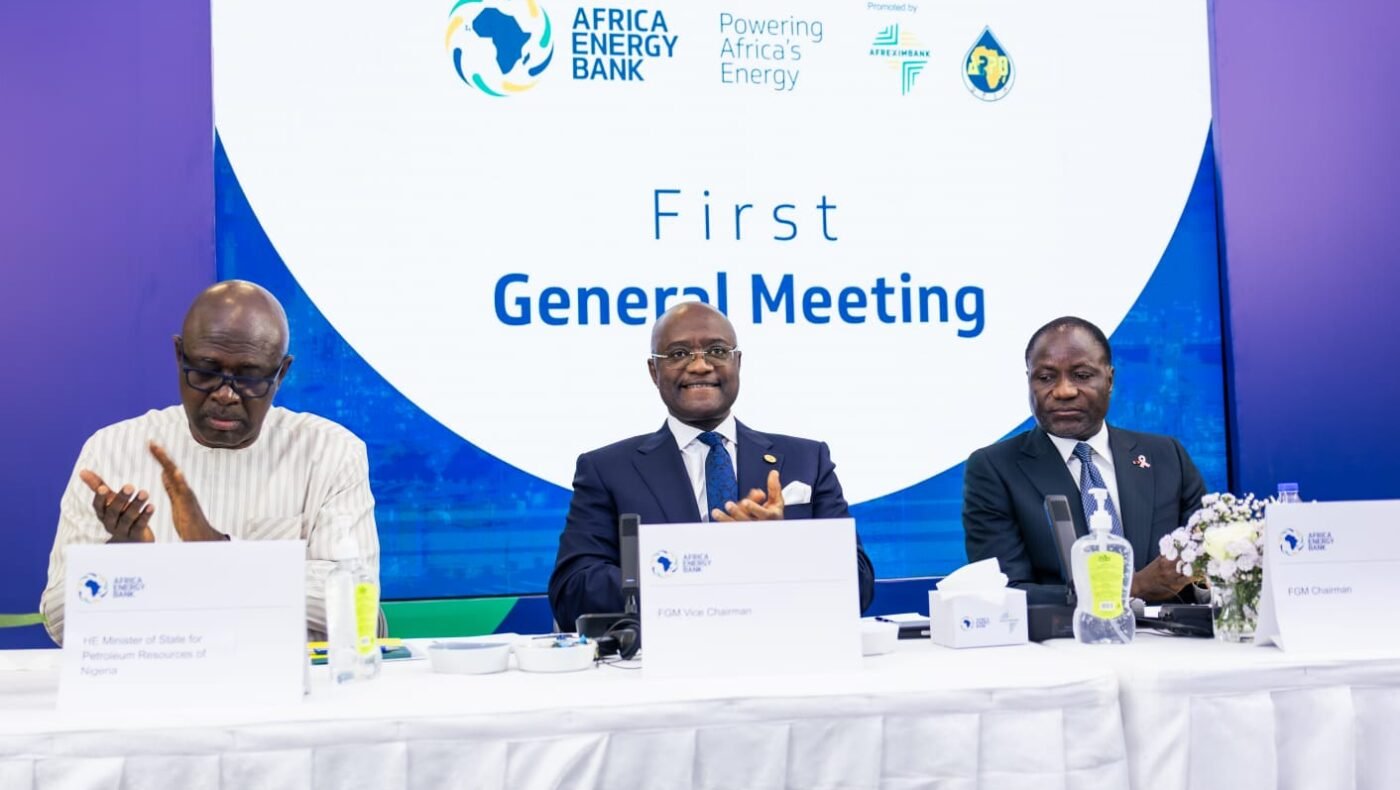
The Africa Energy Bank is now formally established. Created by Afreximbank and the African Petroleum Producers’ Organisation (APPO), it held its inaugural general meeting in Abuja on 31 October 2026. It has $5 billion in authorised capital and a mandate to finance projects across Africa’s energy value chain, from exploration and production to processing, refining and distribution.
But the launch is only part of the story. The larger story is how this new institution fits into a financing ecosystem that is pulling African governments in two directions. Put another way, where will the Africa Energy Bank fit in Africa’s increasingly divided energy-finance ecosystem?
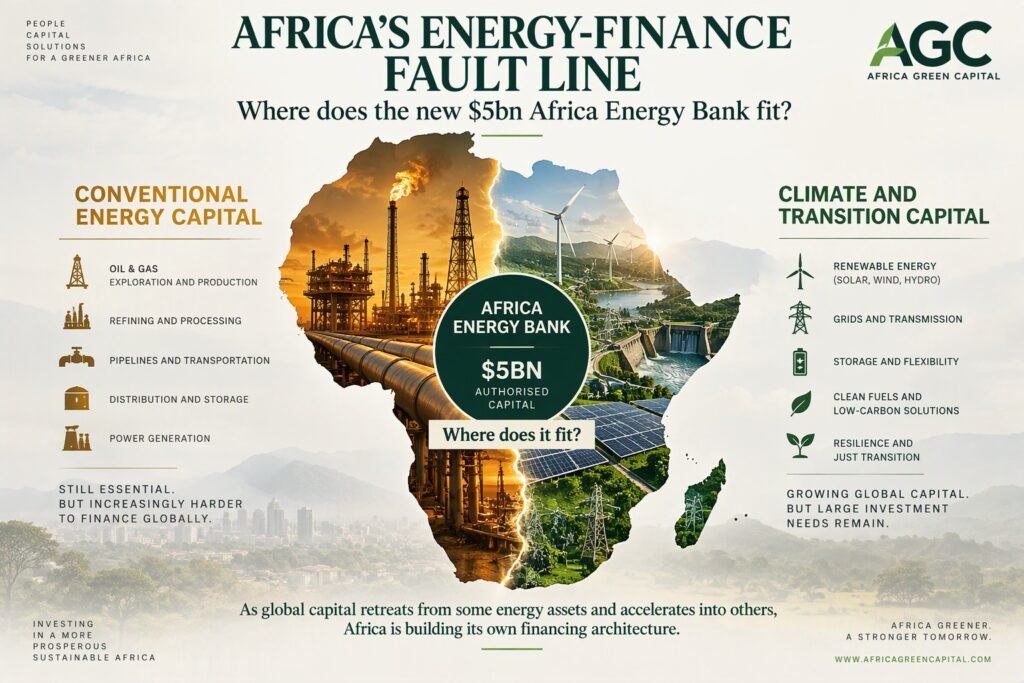
To be clear, the Bank is emerging partly because the global financing environment for hydrocarbons has changed significantly. Traditional providers of energy finance are pulling back from fossil fuels, even though oil and gas still matter to many African economies and energy systems. That puts governments in a difficult position. Many want to be cleaner, more innovative and aligned with the global climate transition, yet they cannot simply switch off the sectors their economies still rely on. Afreximbank estimates the continent’s energy investment needs at $200 billion.
The result is a financing map with a clear divide. On one side sits a growing pool of climate and transition capital, aimed at renewables, grids, storage and low-carbon infrastructure. On the other are African energy assets, particularly upstream oil and gas, refining and related infrastructure. These assets may remain economically important, yet they increasingly struggle to meet the mandates of climate-conscious international lenders. African governments are left standing between the two, and neither choice is easy to walk away from.
The Bank appears designed to occupy part of that gap, which raises hard questions with no easy answers. Will it primarily become a financing refuge for hydrocarbon assets that international lenders increasingly do not want to fund? Or can it help governments pursue both goals, through a genuinely African model of transition finance that deals honestly with natural gas, refining, energy access and industrialisation while steadily supporting cleaner energy? And, perhaps most importantly, what standards will decide which projects receive capital?
The real story will therefore begin with the Bank’s first transactions. Those deals will show whether Africa is simply replacing retreating fossil-fuel finance or building something more ambitious, namely an African-designed architecture for financing its energy transition in ways suited to its peculiar circumstances. We want to believe that behind each decision is a government trying to honour its climate ambitions without cutting off the energy its economy runs on. How well it manages that balance will matter a great deal.
That is the story Africa Green Capital will be watching.
#AfricaGreenCapital #AfricaEnergyBank #EnergyFinance #ClimateFinance #EnergyTransition #GreenFinance #AfricanCapital #Afreximbank
Join the conversation
Share your perspective on this story. We welcome informed contributions from investors, policymakers, practitioners and other readers.